The Justin Aglio Lesson Plan
TIMEFRAME: 30 MINUTES
SUPPLIES:
- post-it notes (around 5+ per student)
- pencils
- Moonshot video (link provided below)
- 1st lesson plan slide deck (link provided below)
- white board or larger poster paper with a 3-tiered bull’s eye drawn on it
Resources:
Slide Deck:
MOONSHOT TEASER:
Other teachers can learn from you! Document your process of the lesson plan. Take pictures and jot down notes about what went well, what could be better, what to watch out for, etc.
Activity 1: Introduction
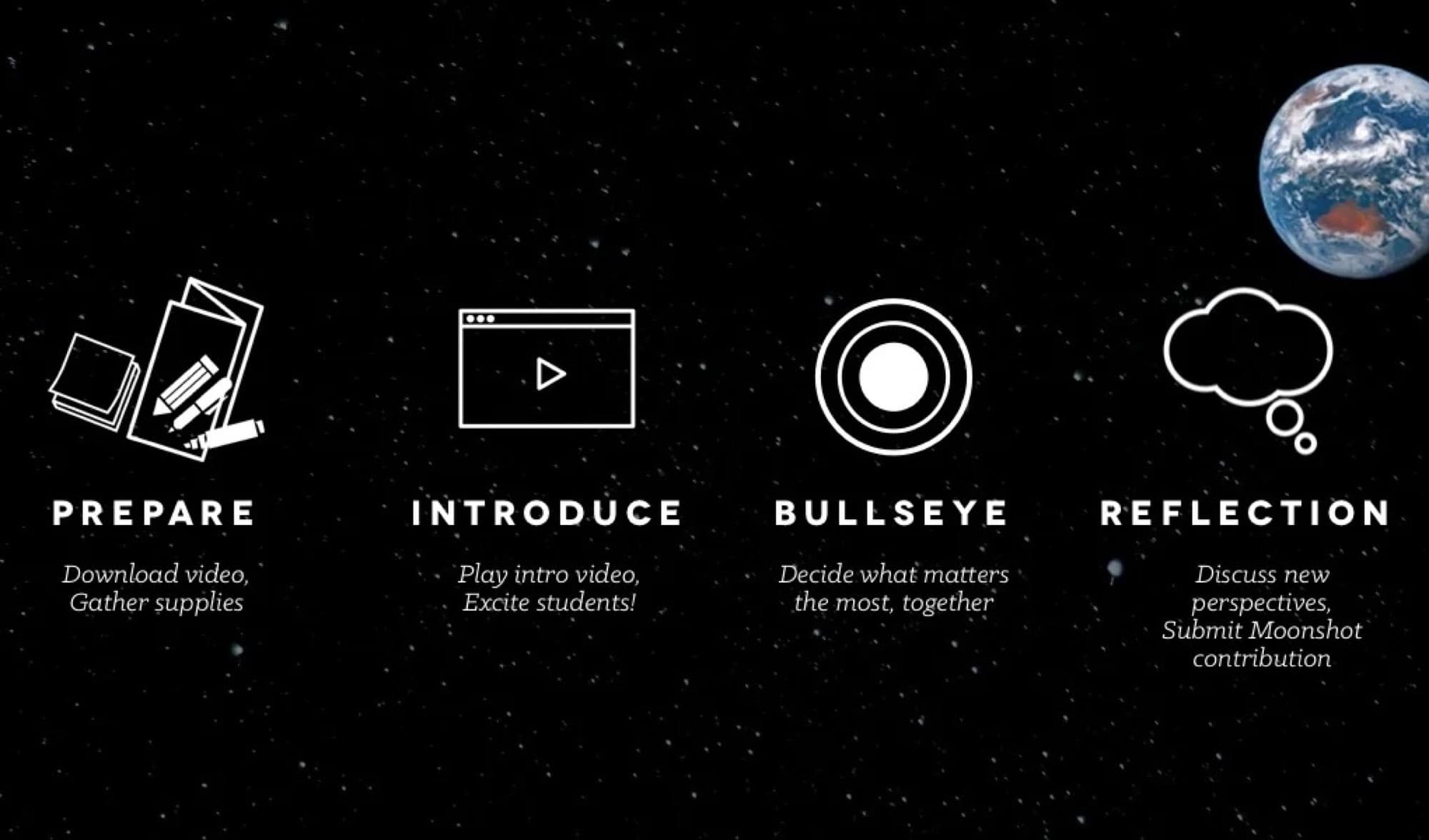
Show your class the Moonshot video and slides. Get them excited!
Timeframe: 2-5 Minutes | Supplies: Video, Moonshot Slides
This is your chance to introduce the Moonshot to your students and get the enthusiasm started. We’ve provided a teaser video and a slide deck to help facilitate the introduction.
Afterwards you can explain the agenda for the day, and pass out post-it notes.
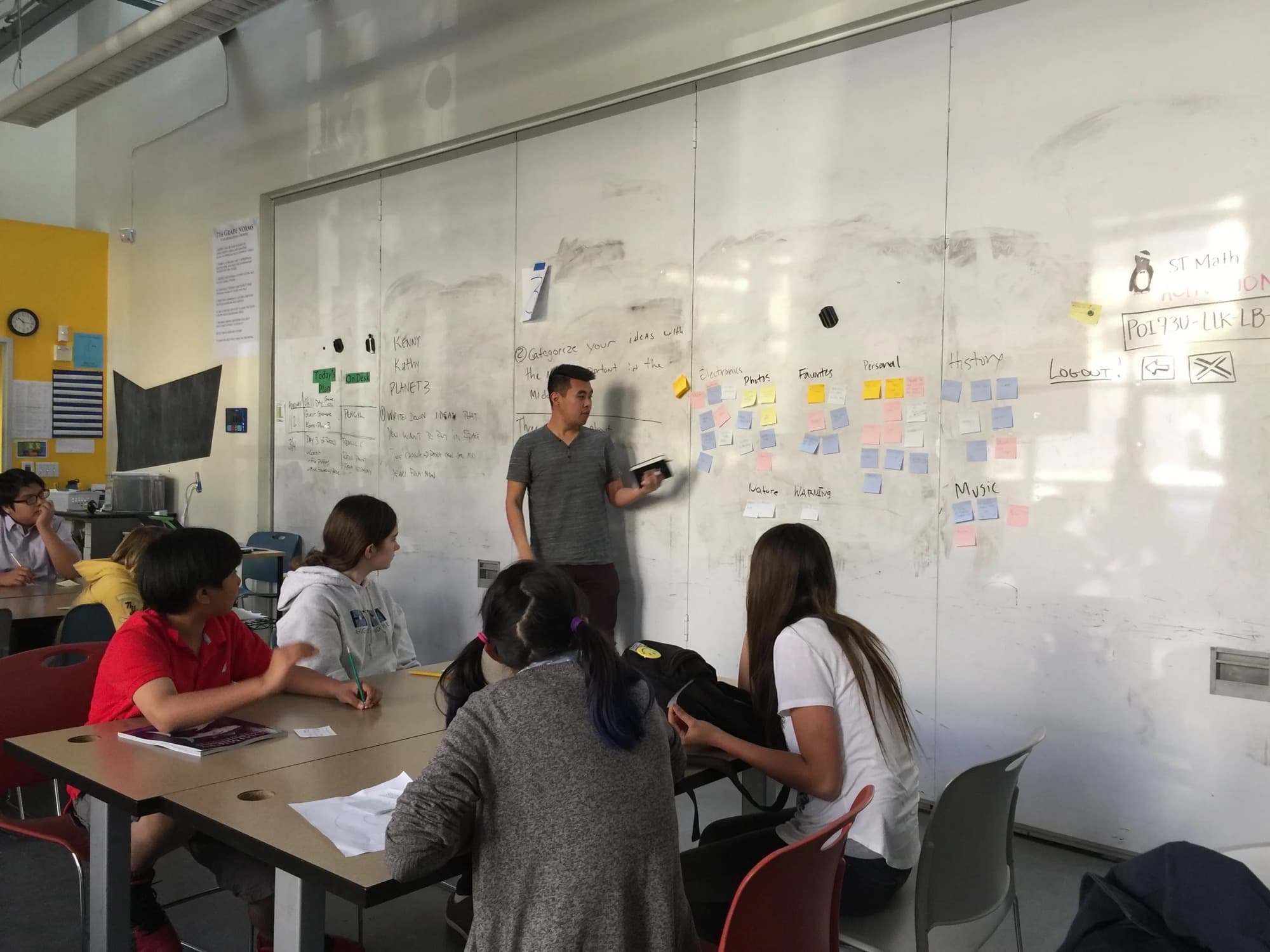
In the above video, Justin Aglio shows his class a video to introduce them to the idea of the Moonshot.

Activity 2: Brainstorm
Generate and share ideas for what should go into the time capsule.
Timeframe: 10 Minutes | Supplies: Post-it notes, Pens
Brainstorming will be split up into three sections in order to maximize effort and creativity:
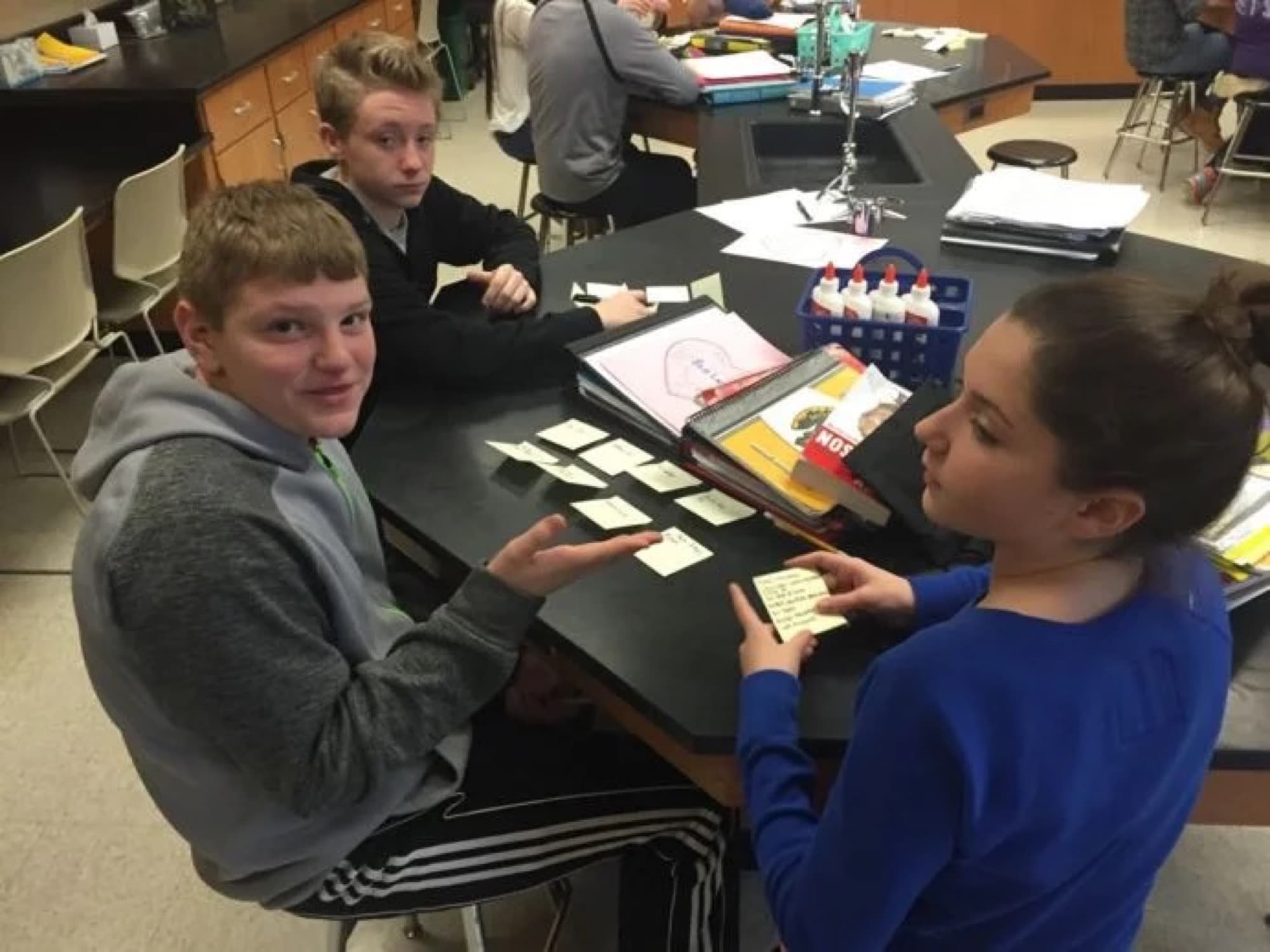
- Three minutes of individual brainstorming: “What do you think should go in EarthCapsuleOne?”
- Three minutes of pair sharing
- Three minutes of full group sharing.
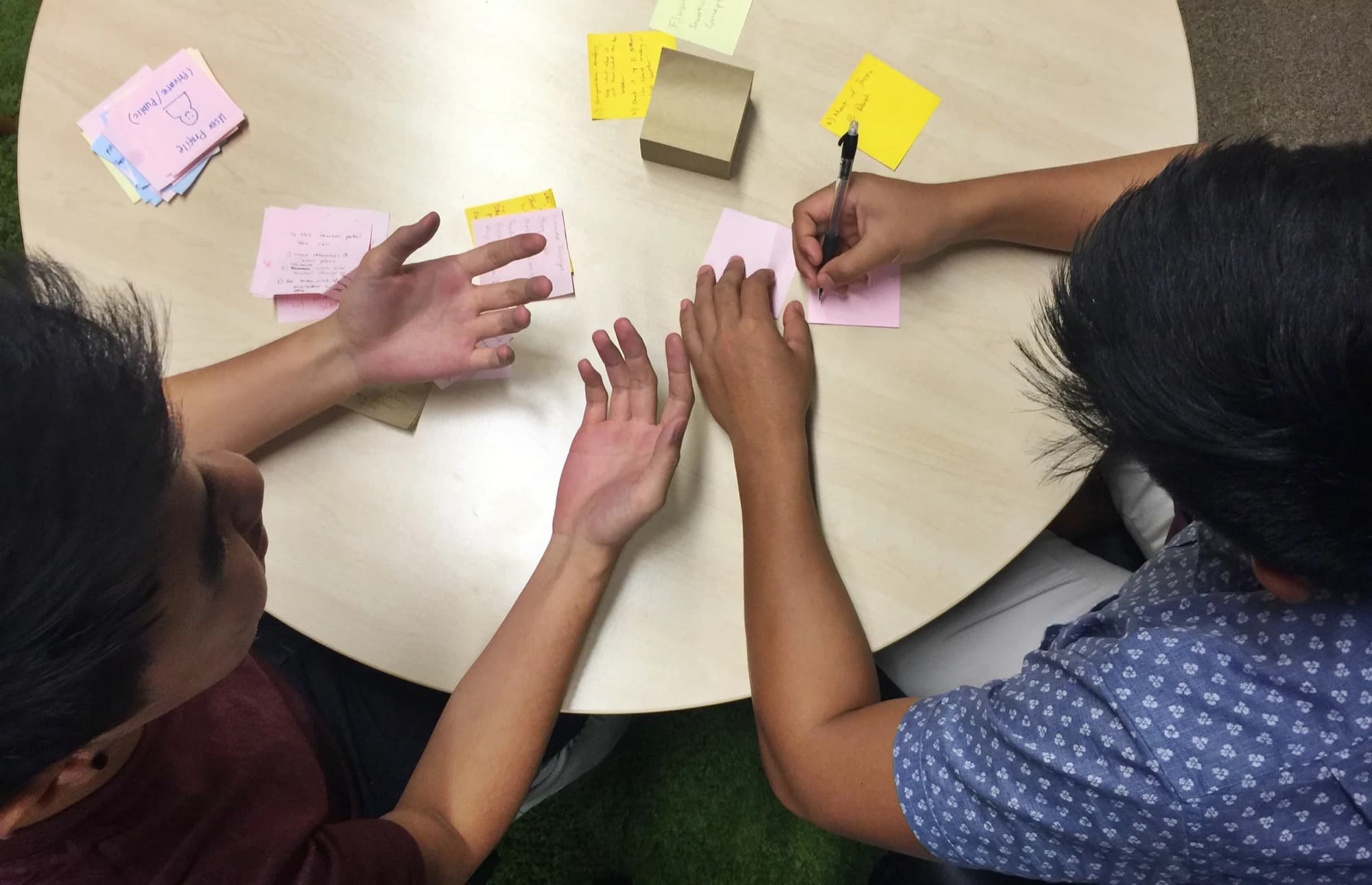
Brainstorming individually will give everyone the chance to come up with their own ideas; pair sharing will help less outspoken people share their idea; full group sharing will consolidate everyone’s idea.
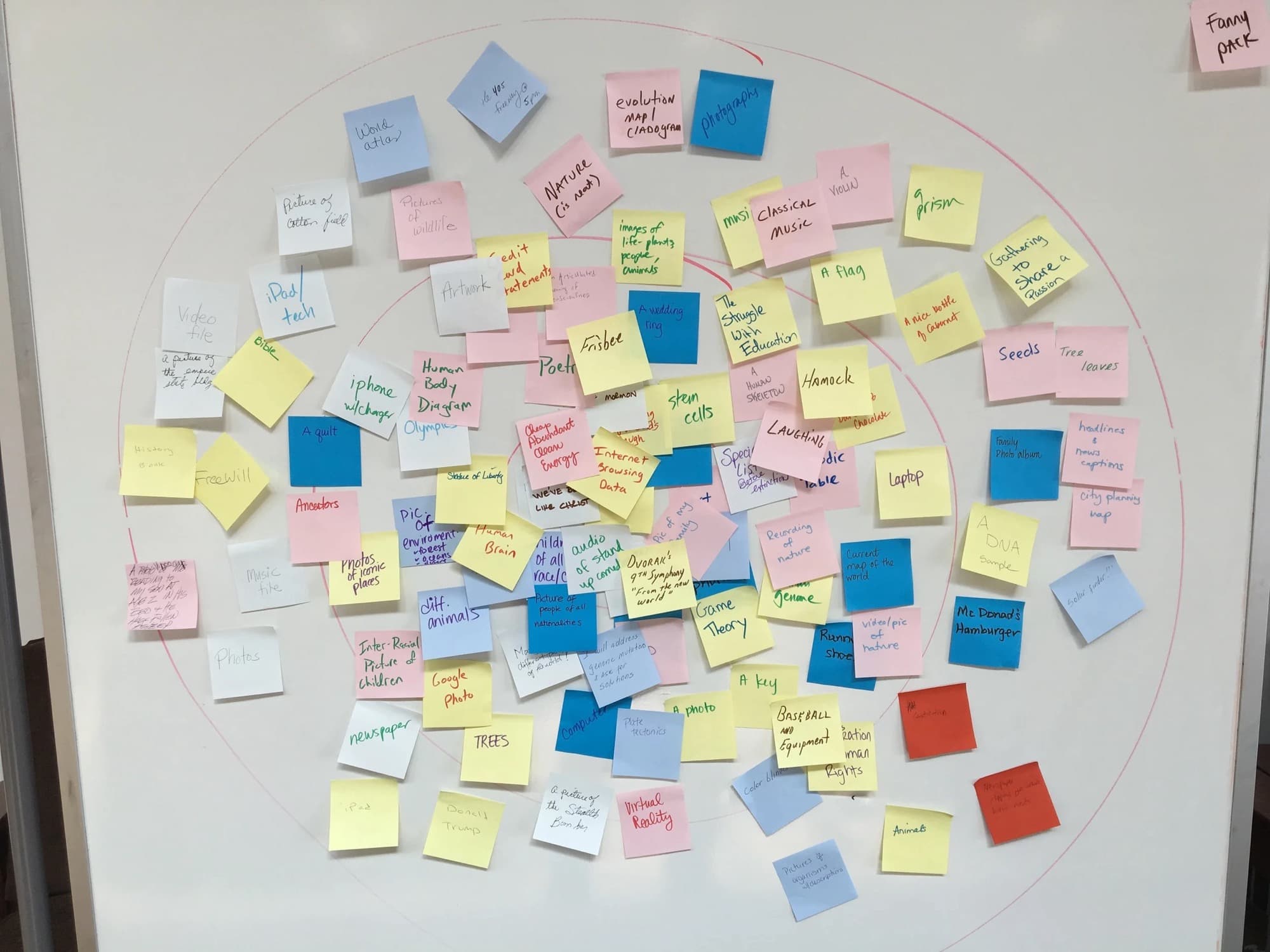
In the above video, Justin Aglio prompts a brainstorming session where students are instructed to write one idea per post-it note on what should go on Earth Capsule One.
Activity 3: BullsEye
Decide what matters the most, together.
Timeframe: 15 Minutes | Supplies: white board or large poster paper

This is the point where we bring everyone’s ideas together and create a hierarchy of what the students think are the most valuable contributions to send on the EarthCapsuleOne.
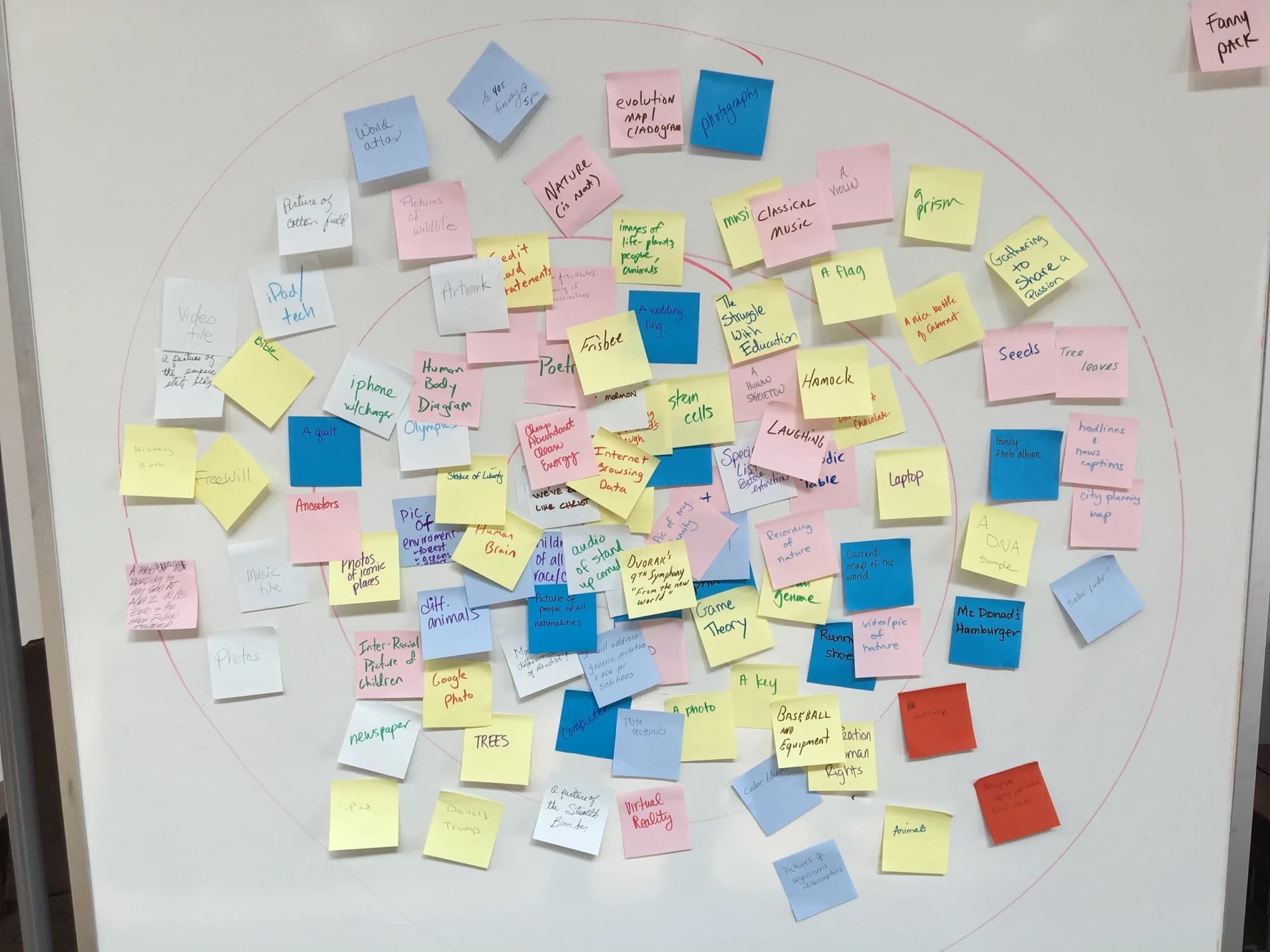
- Create a large bullseye diagram with three layers on a white board or on large poster paper.
- Have one group come up at a time to add their ideas, ranking them accordingly. The center is the most essential contributions, whereas the 3rd ring are the least essential.
- Throughout this activity, help facilitate student participation to make the bullseye activity as smooth as possible.
Send us pictures of your Bullseye! Make sure to take legible pictures of the Bullseye diagram. Take one of the whole diagram, and zoom in on different parts that you find interesting.
In the above video, the students are instructed to share and place their post-it note ideas onto areas of the bullseye.

Activity 4: Reflection
Discuss new perspectives,
think big picture.
Timeframe: 5 Minutes | Supplies: None
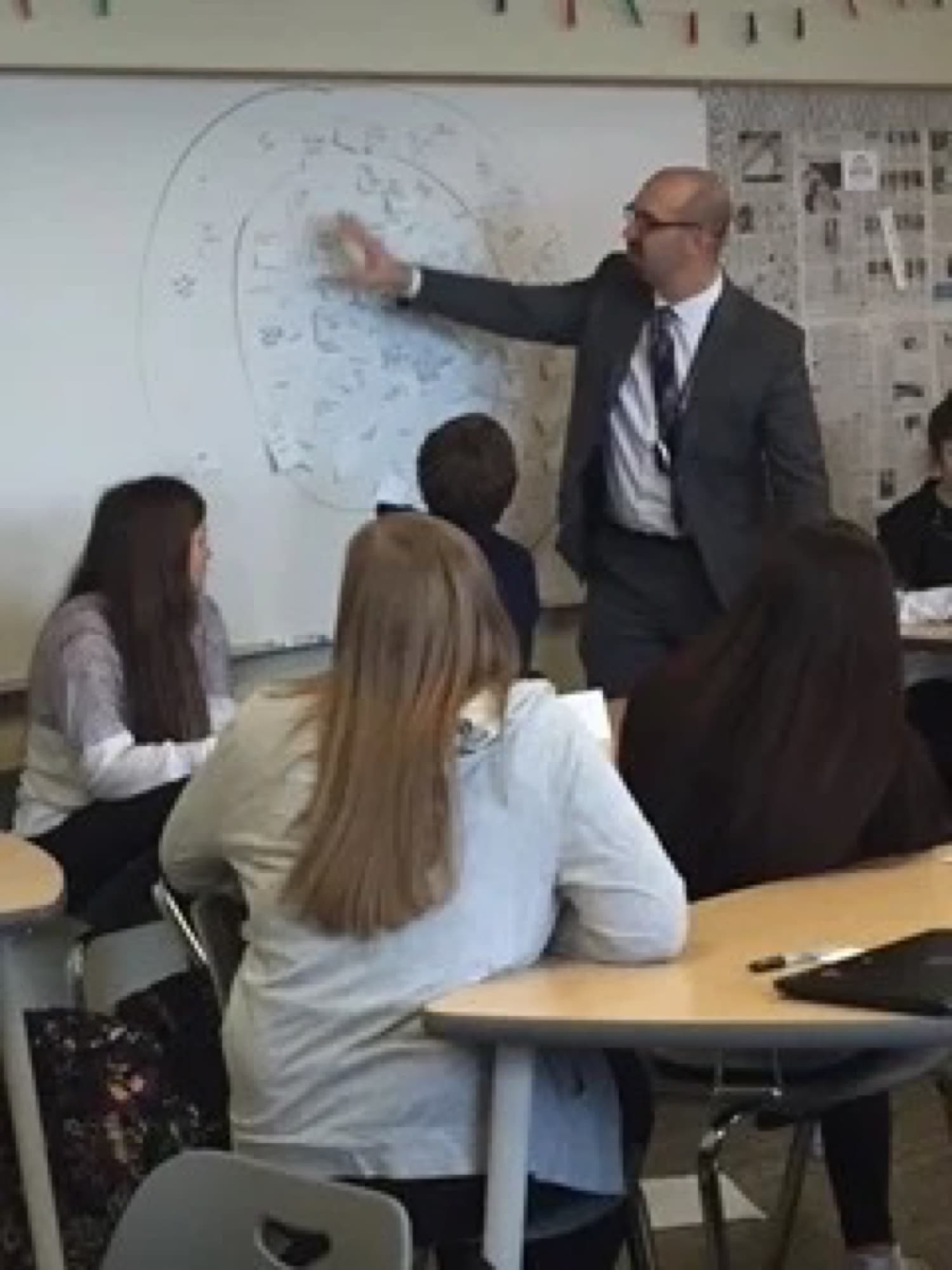
This is a time to go over the bullseye with the entire class and reflect. These are some questions you can ask your students:
- Which ideas did you resonate with the most?
- What do you think the world will be like 100 years from now?
- What do you hope the world will be like in 100 years?
- What do you fear the world will be like in 100 years?
- What are the most important problems in the world that you hope we can solve?
- What would a person 100 years from now find interesting about life today?
In the above video, the students are instructed to think about a message they would like to send to the future.
In the above video, the students are asked, “What should go into the EarthCapsuleOne and why?”
Homework
Submit individual Moonshot contributions!
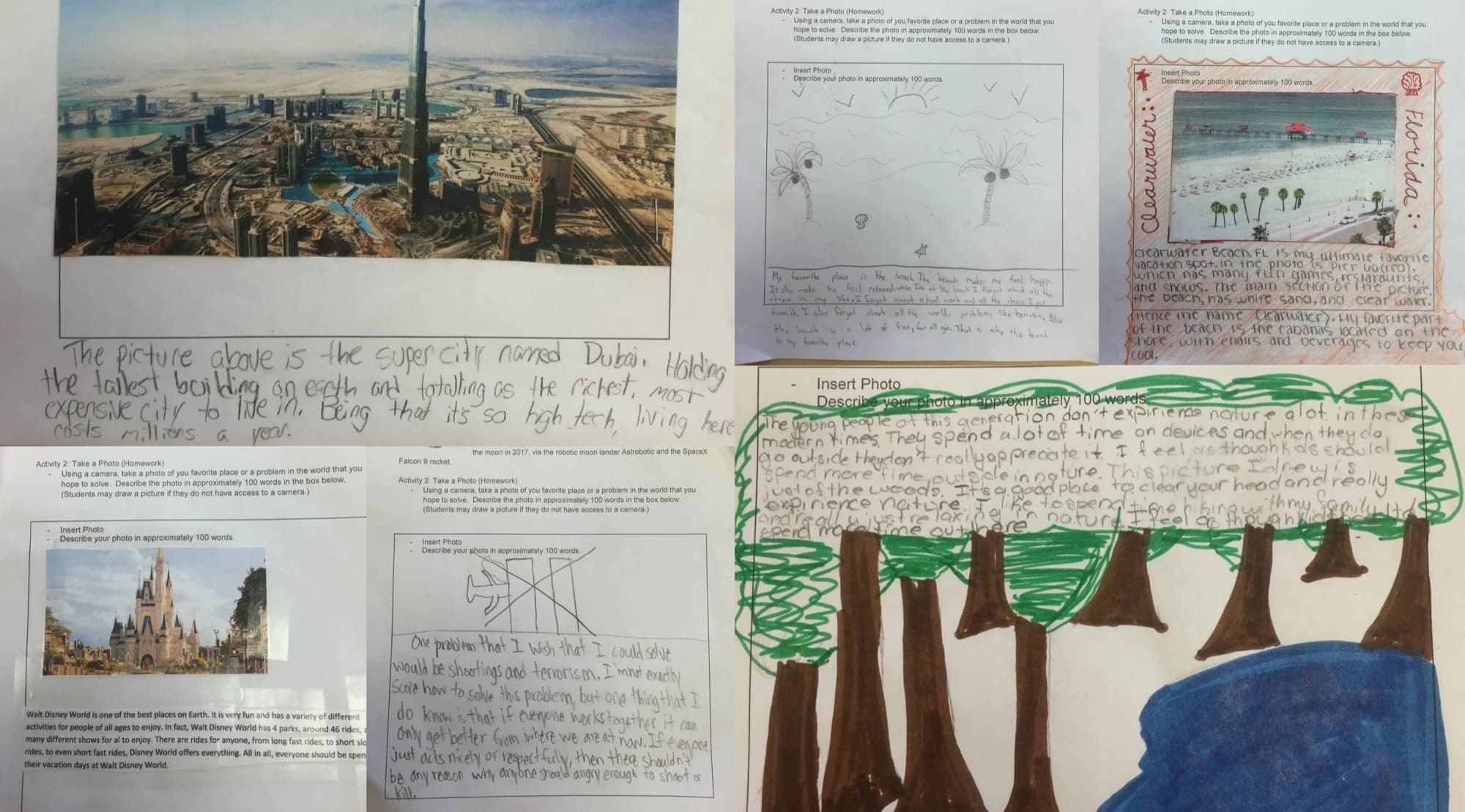
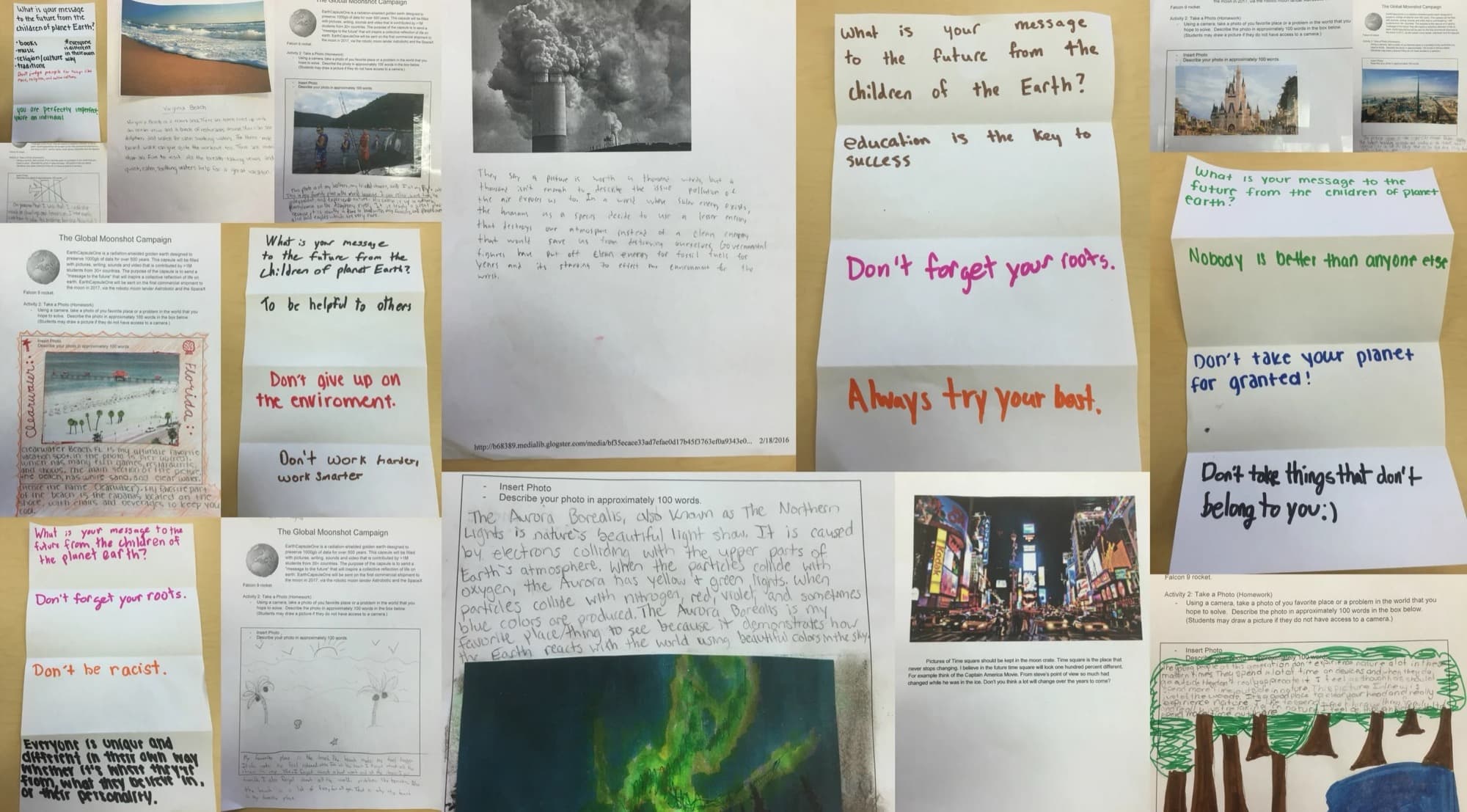
The homework will get your students started on creating their potential contribution to EarthCapsuleOne. The basic structure of the assignment is to take a picture and write an accompanying 100 words describing the picture and what it means to them. These are some examples you can use:
- Take a picture of your favorite place and describe it in 100 words.
- Describe a problem in the world that you hope to solve. Include a picture.
- People in the future might play differently. How do you like to play, today? Take a picture and describe it.
- Take a picture in your community. Describe it.
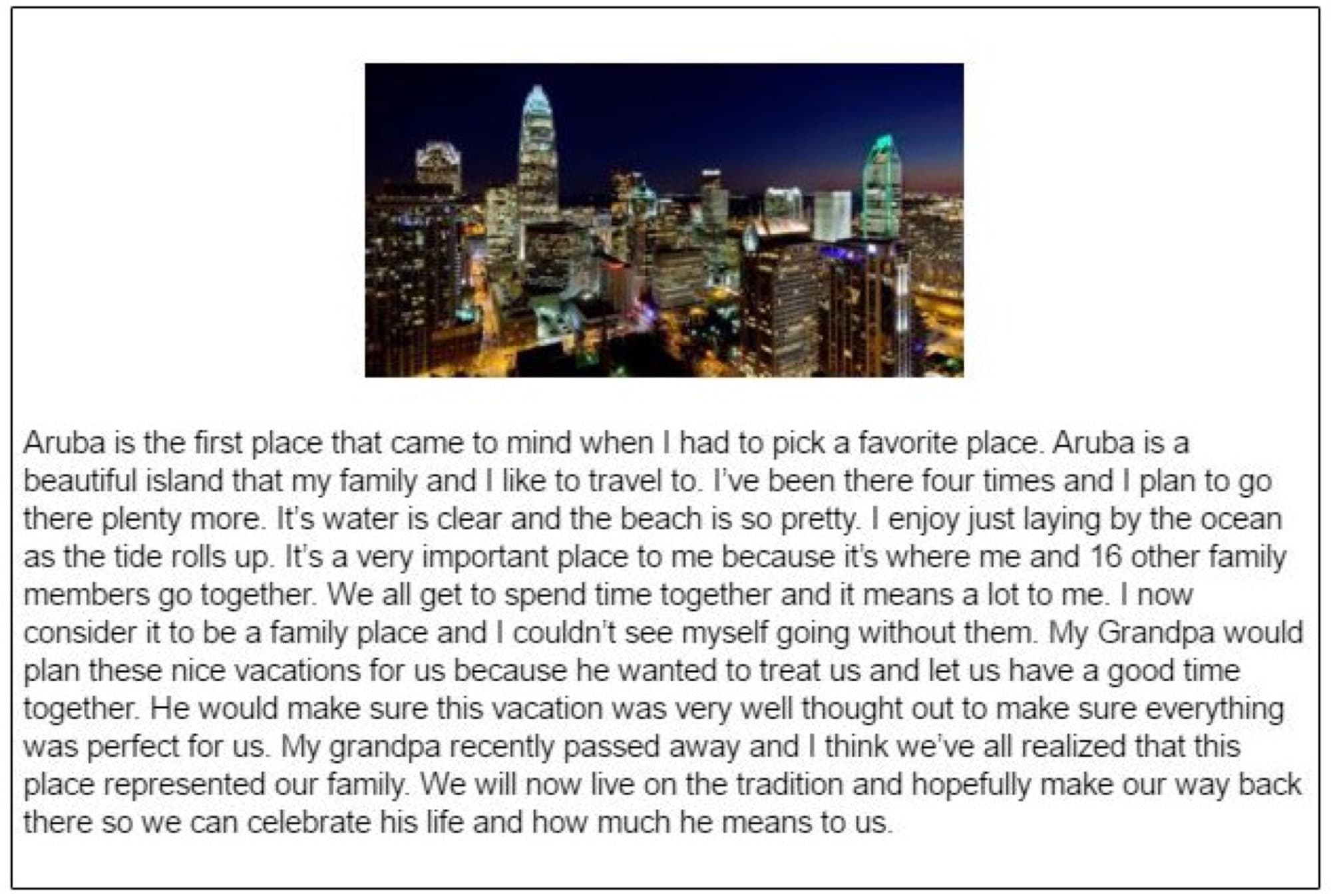
The following image and text is an example of a student’s work for “Take a picture of your favorite place and describe it in 100 words.”
Submission & Feedback
Share your ideas and thoughts with us!
Document Your Lesson Plan!
As you run this lesson plan with your classroom, take a picture of your classroom’s bullseye as well as any meaningful moments your students share. Afterwards, share these photos with us on the:
Here, you can get in touch with other teachers also taking part in the Moonshot, view their results and discuss new ideas.
If you would like to contact us directly, feel free to email us at sandiego@exploreplanet3.com and we will get back to you in a timely manner.